
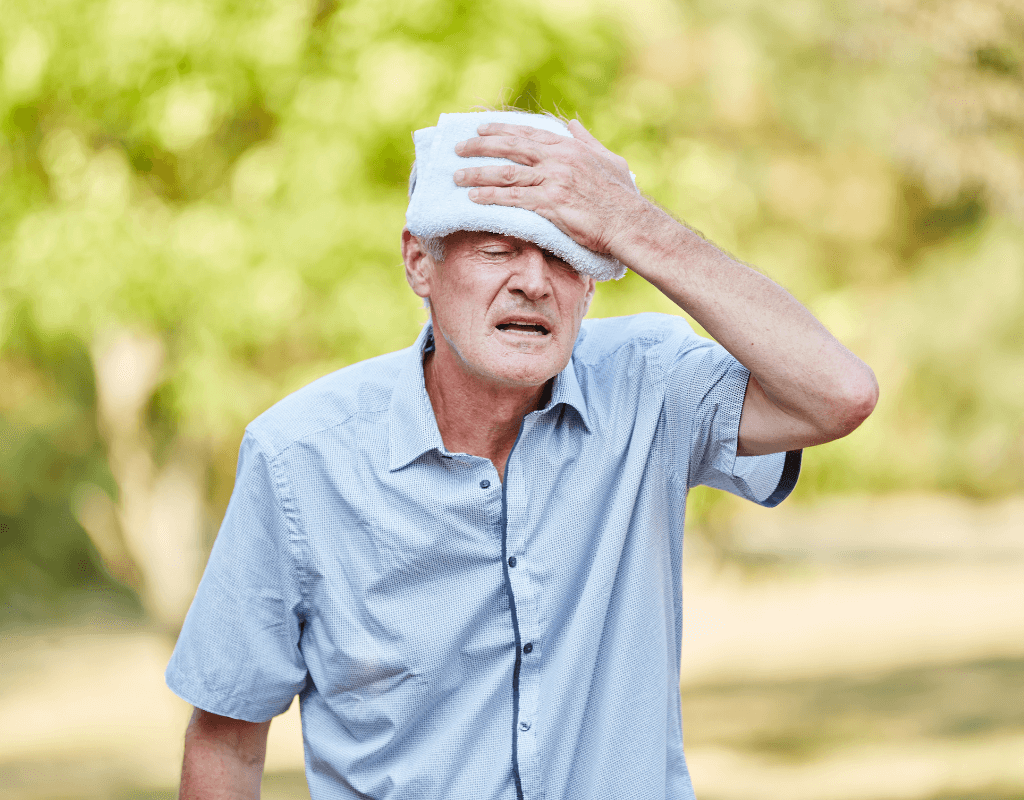
As I write this, it is 120 degrees outside where I live in the southern California desert. This topic is very timely for many. As the summer heat intensifies, family members and caregivers must ensure that seniors stay cool and comfortable. Older adults are more susceptible to heat-related illnesses, making it essential to take proactive measures to protect their health. Here is how to keep seniors cool when the temperature heats up.
How To Keep Seniors Cool – 8 Tips
1. Stay Hydrated
Proper hydration is vital as seniors are more prone to dehydration due to a reduced sense of thirst and potential medical conditions. Dehydration can lead to serious health issues, including heat stroke.
- Encourage drinking plenty of water throughout the day, even if they don’t feel thirsty.
- Incorporate hydrating foods such as watermelon, cucumbers, and oranges into their diet.
- Avoid beverages that can lead to dehydration, such as caffeine and alcohol.
2. Dress Appropriately
Wearing the right light-weight clothing can make a significant difference in staying cool.
- Opt for light-colored, loose-fitting clothing made of breathable fabrics like cotton.
- Also, encourage the use of wide-brimmed hats and UV-protective sunglasses when outside to protect against the sun.
3. Use Air Conditioning and Fans
Maintaining a cool indoor environment is vital for preventing heat-related illnesses.
- Keep the home cool with air conditioning or portable A/C units, and set them to a comfortable temperature.
- Use portable fans to circulate air and consider using a cool mist humidifier to add moisture to the air.
4. Limit Outdoor Activities
Avoiding outdoor activities during peak heat hours can prevent overheating.
- Stay indoors during the hottest parts of the day (10 a.m. to 4 p.m.).
- Plan outdoor activities for early mornings or late evenings when it’s cooler.
5. Cool Showers and Baths
Taking cool showers or baths can help lower body temperature effectively.
- Encourage taking cool showers or baths multiple times a day if necessary to stay cool.
6. Use Cooling Products
Utilizing products designed to cool the body can be very effective.
- Use cooling towels, pads, or gel packs, which can be found at most drugstores or you can buy them online.
- Place ice packs on pulse points such as wrists, neck, and ankles for quick cooling.
- Use a personal neck fan to keep cool.
7. Adjust the Diet
Eating smaller, lighter meals can help reduce the body’s heat production.
Tips:
- Opt for meals that are easy to digest and require less energy to metabolize.
- Enjoy cold snacks like smoothies, yogurt, and salads to help keep the body cool.
8. Utilize Community Resources
Many communities offer resources to help residents stay cool during extreme heat such as cooling centers.
- Provide information on local cooling centers where seniors can go to stay cool.
- Mention any programs that offer assistance with utility bills to ensure air conditioning can be used.
Recognize Heat-Related Illnesses
Being aware of the symptoms of heat-related illnesses can save lives. Educate yourself on the signs of heat exhaustion and heat stroke, such as dizziness, nausea, headache, rapid heartbeat, and confusion. It is important to seek medical help immediately if these symptoms occur.
Conclusion
Keeping seniors cool and safe during the summer heat is crucial for their health and well-being. By following these tips, you can help prevent heat-related illnesses and ensure a comfortable summer for loved ones. Let me know in the comments section below if you have any other tips or tricks to keep seniors cool in the summer heat.
Here’s a little transparency: Our website contains affiliate links. This means if you click and make a purchase, we may receive a small commission. Don’t worry, there’s no extra cost to you. It’s a simple way you can support our mission to bring you quality content.
Recommended For You

Sample Family Caregiver Agreement
More than 34 million Americans served as informal (unpaid) caregivers during the previous year according to the AARP Public Policy Institute. Oftentimes, these are adult children caring for an aging …

How to Monitor an Elderly Parent
Are you worried that your elderly parent is struggling to remain independent and that you can’t be there every day to make sure they are safe? There are millions of …

How To Talk To Parents About Aging
After my mom had a brain hemorrhage due to complications from MS, she required 24-hour care. And, even though she had MS and we knew what the eventual outcome might …

Assisted Living vs. Home Care
With age comes less independence and, for many, the need for help with many of the activities of daily living.

Is Exercise Good For Seniors?
You’ve probably heard that exercise and physical activity are good for you? In fact, being physically active is one of

12 Steps To Reduce Caregiver Stress
If you are reading this article, chances are you are a caregiver and you are stressed out! I’ve been there. Being a caregiver is one of the most selfless and …